Unlock Your True Confidence: A Complete Guide to Jaw Surgery (Orthognathic Surgery) in Nepal
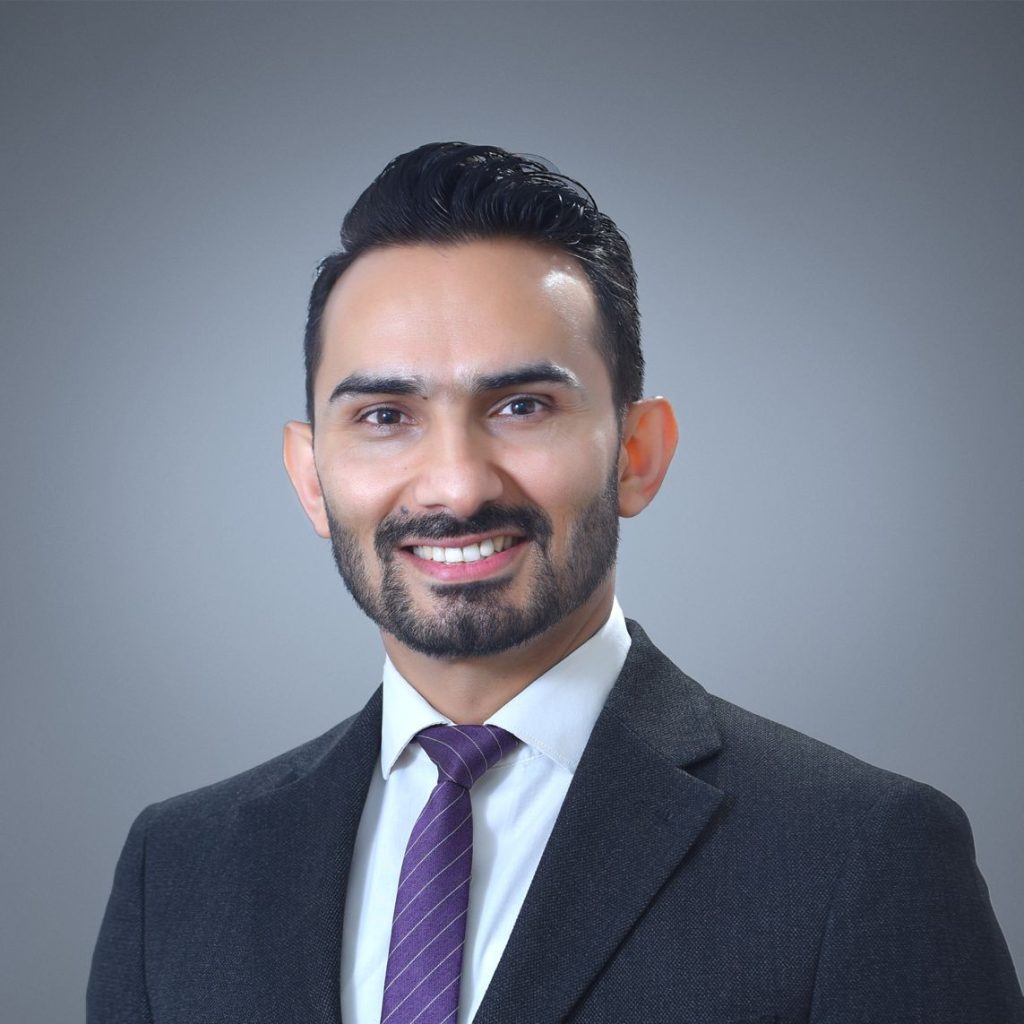
By Dr. Kishor Bhandari
Senior Consultant Oral and Maxillofacial Surgeon
Have you ever looked in the mirror and felt that your smile just doesn’t “fit” your face? Maybe your chin sticks out a little too much, or perhaps it feels too far back. Maybe when you bite down, your teeth don’t touch the way they should.
If you are a college student or a young professional in your 20s, you are at a time in your life where confidence means everything. Whether it’s presenting in class, going for a job interview, or just taking a selfie with friends, you want to put your best face forward.
I meet many young people in Kathmandu and across Nepal who hide their smiles because of jaw issues. But here is the good news: you don’t have to live with it. As an Oral and Maxillofacial Surgeon with over 12 years of experience, I have helped many patients transform not just their faces, but their lives through Jaw Surgery, scientifically known as Orthognathic Surgery.
In this article, I will explain everything you need to know about corrective jaw surgery in simple, easy-to-understand language. No confusing medical jargon—just the facts you need to make the best decision for your future.
What is Orthognathic Surgery (Jaw Surgery)?
Let’s start with the basics. Orthognathic surgery (pronounced or-thog-nath-ic) is a corrective procedure that straightens or repositions your jaw.
Many people think this is just “plastic surgery” or purely cosmetic. While it definitely improves how you look, it is actually a functional surgery. It fixes irregularities in your jaw bones to align your jaws and teeth properly.
Think of it like this: If the foundation of a house is crooked, the windows and doors won’t close properly. Your jaws are the foundation of your face. If they aren’t lined up, your teeth (the doors and windows) won’t meet correctly. This surgery moves the bones into the right position so everything works—and looks—perfect.
Facial Deformities: Do I Need Jaw Surgery?
You might be wondering, “Do I really need surgery, or is this just how I look?”
Usually, if you just have crooked teeth, braces (orthodontics) alone can fix the problem. But if the problem is with your bones—the actual size or position of your upper or lower jaw—braces aren’t enough. You likely need a combination of braces and surgery.
Here are the common conditions (facial deformities) that we treat with jaw surgery in Nepal:
1. Underbite (Prognathism)
This is very common in Nepal. This happens when your lower jaw grows too much and sticks out further than your upper jaw.
The Look: Your chin looks prominent or “strong.” When you close your mouth, your bottom teeth sit in front of your top teeth.
The Problem: It can be hard to bite into food (like an apple/corn), and it can make you look angry or serious even when you aren’t.
2. Overbite / Receding Chin (Retrognathism)
This is the opposite of an underbite. Here, the lower jaw is too small or set too far back.
The Look: You might feel like you have a “weak” chin. It can give the face a bird-like appearance.
The Problem: Severe overbites can damage your gums and make it difficult to close your lips comfortably.
3. Open Bite
This is when your back teeth touch, but your front teeth do not.
The Look: Even when you bite down properly, there is a gap between your upper and lower front teeth.
The Problem: You cannot use your front teeth to cut food (like tearing a sandwich). It can also cause a lisp when you speak.
4. Gummy Smile (Vertical Maxillary Excess)
Do you feel like you show too much gum tissue when you smile?
The Look: The upper jaw has grown too long vertically. When you smile, a large amount of pink gum is visible above your teeth.
The Problem: Many patients feel very self-conscious about smiling fully. It can also lead to “lip incompetence,” meaning you have to strain your muscles just to close your mouth.
5. Facial Asymmetry
This is when one side of your face doesn’t match the other.
The Look: Your chin might shift to the left or right. One cheek might look fuller than the other.
The Problem: This creates an unbalanced look and causes uneven wear on your teeth.
6. Sleep Apnea and Breathing Issues
This is a hidden problem. If your jaws are too narrow or set back, they can block your airway when you sleep.
The Sign: Heavy snoring or waking up tired.
The Fix: Moving the jaws forward opens the airway. I frequently speak on this topic, such as “Trends in Skeletal Surgeries for OSA” (Obstructive Sleep Apnea) , because fixing the jaw can often cure breathing problems better than machines can.
Advanced Technology: Virtual Surgical Planning (VSP) in Nepal
In the past, surgeons had to plan these complex surgeries using manual drawings or plaster models. It involved a bit of estimation.
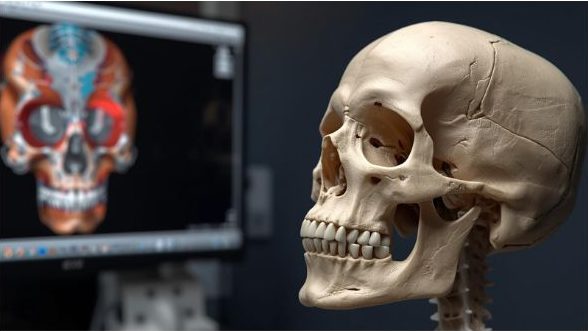
Today, I am proud to say that we have pioneered modern practices in Nepal, specifically Virtual Surgical Planning (VSP) and 3D printing.
What is Virtual Surgical Planning?
During my Fellowship in Craniofacial Surgery at Chang Gung Memorial Hospital in Taiwan, I mastered the use of advanced computer technology for surgery.
Here is how it works for you:
CT Scan: We take a 3D scan of your head.
Computer Simulation: I upload your skull onto a computer screen. I can then perform the surgery digitally before I ever touch you. I can move your jaw 1 millimeter to the left, 2 millimeters up, or rotate it until it is perfect.
3D Printing: Once we have the perfect plan, we use 3D printers to create custom plastic guides. These guides fit on your teeth during the real surgery and tell me exactly where to make the cuts and where to place the bones.
Why is this better for you?
Accuracy: It is incredibly precise.
Safety: We know exactly what to expect before we start.
Predictability: We can show you a simulation of what your face might look like after surgery.
Faster Surgery: Because the planning is done beforehand, the actual time you spend in the operating room is reduced.
I have presented on the success of introducing this VSP technology to Nepal at international congresses in South Korea and India because I believe Nepali patients deserve the world-class standard of care.
The Journey: What to Expect Before, During, and After
If you are considering this life-changing procedure, here is a simple roadmap of what the journey looks like.
Phase 1: Preparation (Orthodontics)
Before we can move your jaws, your teeth need to be in the right position relative to the bone. You will likely wear braces for 12 to 18 months before the surgery. This is often done in coordination with an orthodontist.
Phase 2: The Surgery
Hospital Stay: You will be admitted to the hospital (usually Bir Hospital or a specialized center like Norvic International Hospital ).
Anesthesia: You will be completely asleep (general anesthesia). You won’t feel or remember anything.
No Visible Scars: This is the best part! For almost all jaw surgeries, the incisions (cuts) are made inside your mouth. This means there are no scars on your face.
The Procedure: I will carefully separate the jawbone, move it to the new position we planned on the computer, and secure it with tiny titanium plates and screws. These usually stay in forever and don’t cause any problems.
Phase 3: Recovery
First Week: You will have swelling and some discomfort, which is managed with medicine. You will be on a liquid diet (soups, juices, milkshakes).
First Month: The swelling goes down significantly. You can start eating soft foods (like dal bhat that is very soft, mashed potatoes, eggs).
Return to School/College: Most students feel ready to go back to class after 2 to 3 weeks.
Final Result: While your bite is fixed immediately, the final aesthetic shape of your face settles in fully after a few months once all the swelling is gone.
Your face is your identity. You shouldn’t trust it to just anyone. You need a surgeon who understands not just the bone, but the artistry of the face.
Here is why patients trust me with their smiles:
Specialized Global Training: I didn’t just study in one place. I completed my Masters in Oral and Maxillofacial Surgery in China and then completed a highly competitive Fellowship in Craniofacial Surgery in Taiwan. I have also completed advanced clinical trainings in the USA (University of Maryland), Germany (Dusseldorf), and India(AIIMS).
Recognized Expertise: I currently serve as a Senior Consultant and Associate Professor at the National Academy of Medical Sciences (Bir Hospital). I am also a faculty member for AOCMF, a global organization dedicated to craniomaxillofacial surgery.
Comprehensive Care: Beyond just moving jaws, I specialize in complex cases involving the TMJ (jaw joint). If you have jaw popping or pain along with your deformity, I can treat both problems. I have specific training in TMJ Arthroscopy and Joint Replacement, ensuring your jaw doesn’t just look good, but functions pain-free.
A Pioneer in Nepal: I am passionate about bringing “firsts” to our country. I was among the first to introduce Virtual Surgical Planning (VSP) and 3D printing for facial deformity correction in Nepal.
Common Myths About Jaw Surgery
Let’s bust some common myths I hear from students and parents:
Myth: “My jaw will be wired shut.”
Fact: In modern surgery, we use rigid plates and screws. We rarely wire jaws shut anymore. You will be able to open your mouth and talk (though stiffly) right after surgery.
Myth: “It’s too expensive/risky in Nepal.”
Fact: With the introduction of computer-guided surgery, the safety profile is excellent. Furthermore, getting this surgery in Nepal is a fraction of the cost compared to going abroad, while using the exact same technology and techniques I learned in Taiwan and Germany.
Myth: “I’m too old for this.”
Fact: While the late teens and early 20s are the ideal time (because bone growth is complete), healthy adults of any age can benefit from this surgery.
Conclusion: A New You Awaits
Correcting a facial deformity is about more than just vanity. It is about being able to chew your food properly. It is about breathing better and sleeping deeper. And yes, it is about looking in the mirror and loving the smile you see.
If you are hiding your smile, struggling to chew, or just want to explore your options, I am here to help. We can use advanced 3D scans to look at your unique facial structure and create a plan just for you.
Key Takeaways:
It’s Not Just Cosmetic: Jaw surgery fixes bite issues, breathing problems, and facial balance.
No Scars: Surgery is done inside the mouth.
High Tech: We use Virtual Surgical Planning for precise, safe results.
Expert Care: Performed by Dr. Kishor Bhandari, an internationally trained specialist in craniofacial surgery.
Ready to Transform Your Smile?
Don’t let jaw issues hold you back from living your best life. Let’s discuss how we can bring harmony to your face.
Book a Consultation Today:
Bir Hospital: National Academy of Medical Sciences, Kathmandu.
Norvic International Hospital: Thapathali, Kathmandu.
Dental Excellence: Baluwatar, Kathmandu.
Contact Dr. Kishor Bhandari:
📧 Email: maxfacsurg405@gmail.com
📞 Phone: 9851183191
🌐 Facebook:
Take the first step toward the confidence you deserve.